
 Gridbox Pro
Your drawer gets a baseplate that fills it edge to edge.
Let Gridbox Pro do the math for you. Put in the width and length of your drawer and get a zip file of every baseplate piece to print. In Gridbox Pro, the Gridfinity designer for Mac and Windows, it's called Drawer Base: a Gridfinity baseplate built for one drawer.
Designing is free and doesn't need an account. When you're ready to export, it's $130, one time, at launch.
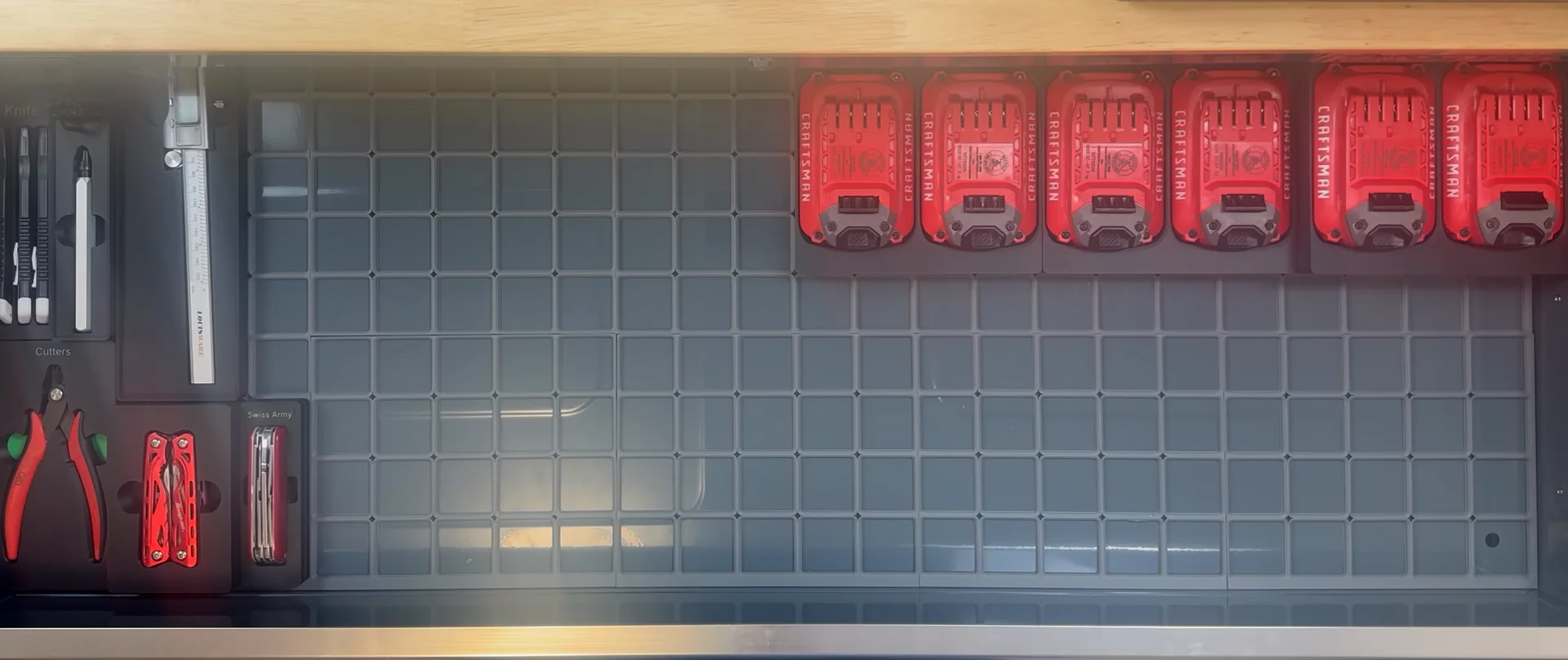
How to measure a drawer for Gridfinity
- Measure the inside of the drawer, left to right and front to back, at its narrowest. Runners and lips often make the opening smaller than the drawer looks.
- Measure to the drawer's back wall, not the cabinet.
- Divide each side by 42 mm. The whole number is how many cells fit, and the rest is left over.
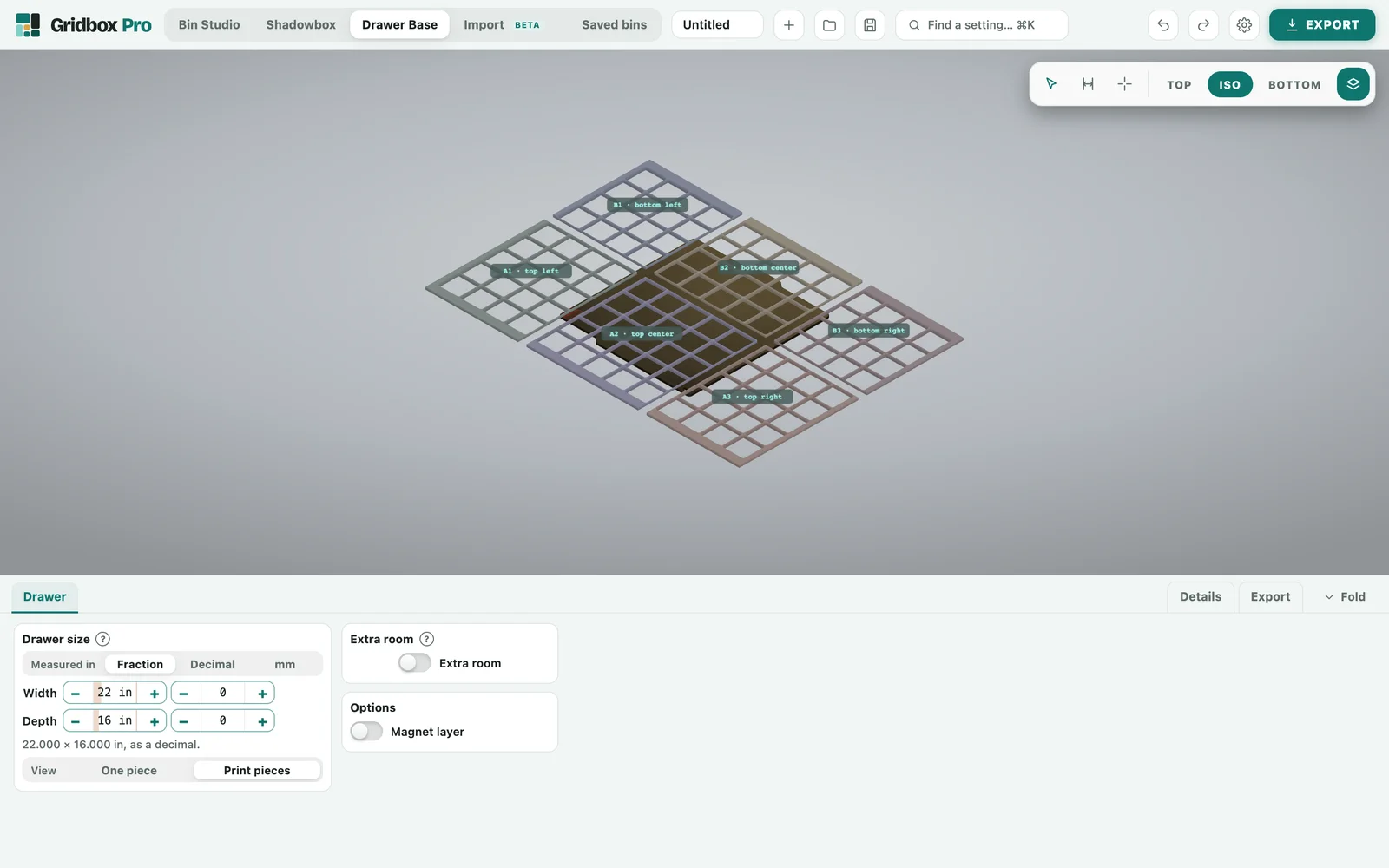
Built for your drawer and your printer.
Inches, fractions or millimeters
Type it the way your tape reads, like 22 3/8, or use decimals or millimeters.
Solid edges, wall to wall
The space past the last whole cell becomes solid strips, so the baseplate fills the drawer and doesn't slide.
Pieces that fit your print bed
Pick your printer, and the baseplate splits into pieces of whole cells that fit its print bed, up to 36 pieces.
A little room, where you want it
Add a small gap on the sides you pick. 0.5 mm suits most drawers, and Gridbox Pro shows you when the gap costs a whole cell.
Magnets that hold the bins
Holes for 6 by 2 mm disc magnets, four in each cell, so your bins stay put when the drawer slides open.
Your printer is on the list
Presets for Bambu Lab P1S, A1, A1 mini, H2D and H2S, Prusa MK4 and Creality Ender 3 or K1, or type any plate size.
Then fill it.
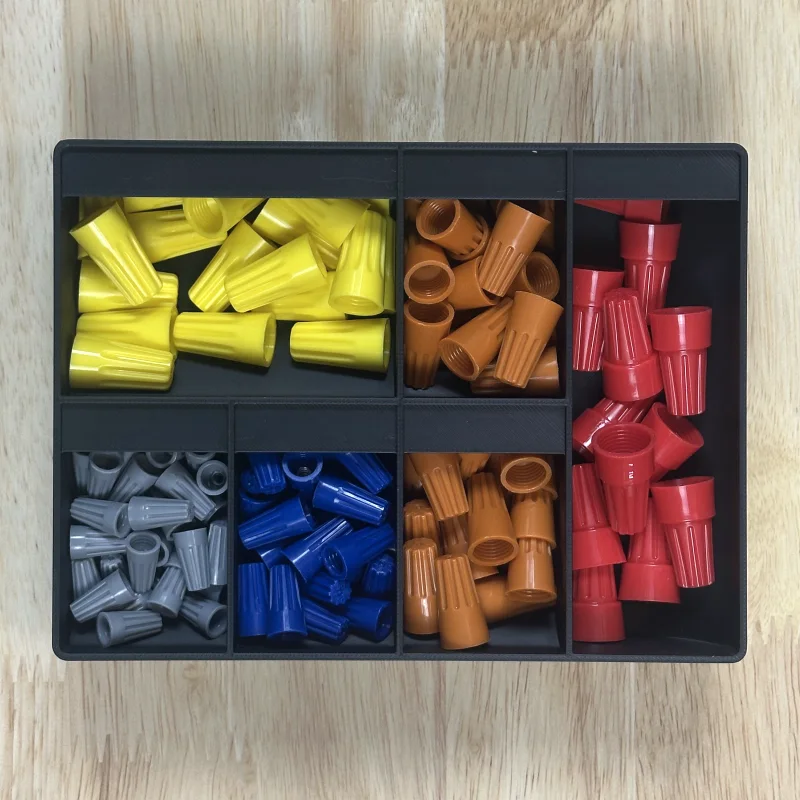
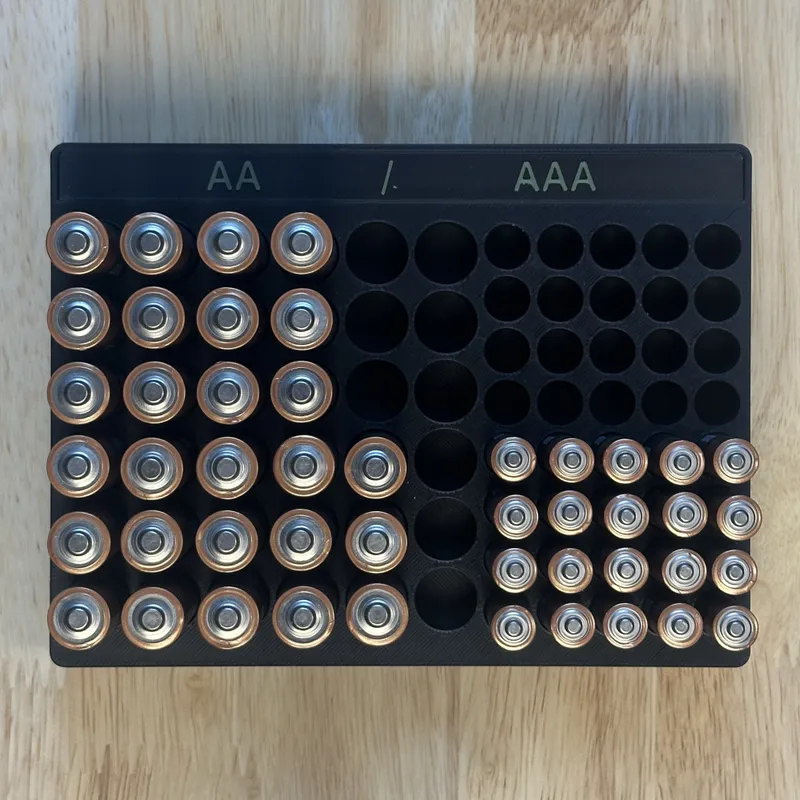
Bins from Bin Studio and shadowboxes traced from a photo drop straight into the baseplate.
Questions
How do I measure a drawer for Gridfinity?
Measure the inside at its narrowest, left to right and front to back, and divide each side by 42 mm. The whole number is how many cells fit, and the rest is left over.
What size is a Gridfinity baseplate?
Each cell is 42 by 42 mm. A Gridbox Pro baseplate is 4.25 mm tall, or 7.05 mm with the magnet layer.
Can I type inches?
Yes. Type whole inches and a fraction the way your tape reads, like 22 3/8, or use decimals or millimeters.
What if my drawer is bigger than my printer?
The baseplate splits into pieces of whole cells that fit your print bed, and the pieces sit side by side in the drawer.
Does it do magnets?
Yes. The magnet layer adds holes for 6 by 2 mm disc magnets, four in each cell, so your bins grip the base when the drawer slides open. To get a magnet back out, push it from below.
Is it free?
Designing is free and doesn't need an account. When you're ready to export, it's $130, one time, at launch.
Start with the drawer that bothers you most.
Download Gridbox Pro, put in your drawer's size, and see the baseplate before you print anything.
Designing is free and doesn't need an account. When you're ready to export, it's $130, one time, at launch.